A patrol without fixed checkpoints and fixed timings is a guard going for a walk. Rounds run to a route agreed with management, every checkpoint is clocked, and the record is available to your committee.
Patrol is the easiest part of a guarding contract to stop doing and the hardest to notice. Nobody complains that the 3am round did not happen. They complain two months later, when a car is broken into on basement level three and it turns out nobody has walked that level in weeks.
So the round gets defined before it starts: which areas, in what order, at what interval, ending at which checkpoint. Each checkpoint is clocked, the round is timed, and photo evidence is attached where the post orders call for it. The data lands in your monthly report, so rounds completed can be checked against rounds scheduled.
The second job of a patrol is maintenance intelligence, and in a Klang Valley high-rise that is worth real money. A propped fire door on the escape staircase. A blown light in a stairwell. A sump pump that has stopped running in a basement car park, two weeks before the monsoon arrives and the ramp floods. Guards find those on the round and report them the same shift, which has nothing to do with crime and often covers the cost of the patrol on its own.
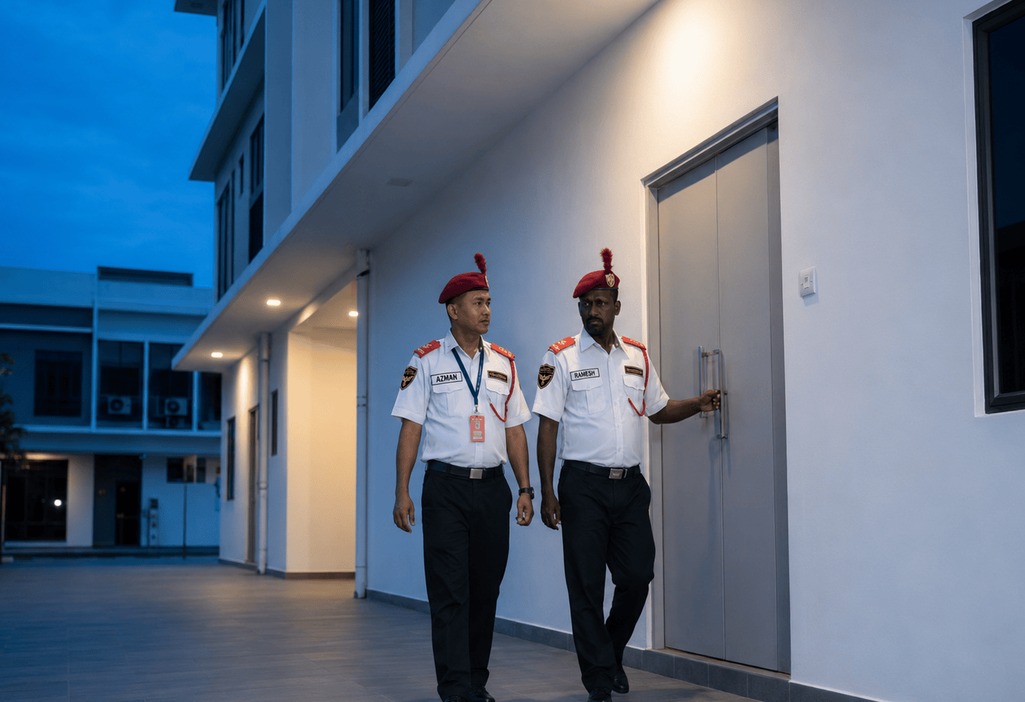
Fence lines, side gates and the boundary points that are easy to reach and easy to ignore.
Basement and podium levels, the areas residents worry about most and see least, including sump pits and ramps during the monsoon months.
Escape staircases and back-of-house doors, the ones that get propped open with a fire extinguisher and stay that way.
Genset, pump room and substation doors checked as secured, because an open plant room is both a security and a safety finding.
Gym, pool deck, surau, function rooms and refuse chambers, checked against the hours your by-laws allow.
Faults, hazards and by-law breaches written up the same round and sent to the management office.
Where one static guard cannot see the perimeter and the car park from the guardhouse.
The highest-anxiety area in most Malaysian condominiums, and the least visible from any post.
A tightened patrol schedule is usually the fastest visible response a committee can offer residents.
Rarely, and we will say so before you sign. Patrol and static duty solve different problems, and asking one guard to do both means the gate stands empty every time he walks the round. Where the budget stretches to one post only, most Klang Valley residential properties are better served by a manned entry point plus a defined patrol at agreed intervals. See static unarmed guarding for how the two are usually paired.
Checkpoint clocking with route, completion time and photo evidence where the post orders require it, all pulled into the monthly report your committee tables. If rounds are being missed, the record shows it before a resident does, which is the whole point of keeping one.
Yes, and on some sites they should be. A patrol that passes the same point at the same minute every night tells anyone watching exactly how long they have. Where that is the risk, intervals are varied within an agreed range rather than fixed.
The service most Malaysian properties are really buying.
Read more EscalationA break-in, a fire alarm, a medical case in the lift lobby or a fight at the gate.
Read more Operating EvidenceGuarding you cannot check is guarding you are taking on trust, and trust is what runs out around month nine.
Read moreSend the property name, how many entry points you have and the shift pattern you run now. You get back a written proposal with the guard count, the roster and the monthly figure. If a smaller deployment does the job, we will say so in the same message.
Request a Site Assessment